Why Do Internal Communications Matter?

Strong internal communication is the backbone of any successful organization. It’s what ensures that every team member understands not only what they’re doing (especially when it comes to sustainability initiatives) but why it matters. When communication flows clearly across departments, teams can align around shared goals, anticipate challenges, and celebrate wins together.
Good internal communication builds trust, transparency, and efficiency. It minimizes confusion, reduces duplicated effort, and helps employees feel connected to the mission rather than siloed in their roles. This alignment leads to faster decision-making, stronger morale, and a culture where people feel empowered to speak up, share ideas, and take ownership of outcomes.
Ultimately, a team that feels close with each other is a team that succeeds where others do not.
So, what can you do?
Since internal communication is where culture starts, it’s also where it’s either strengthened or lost. It ensures that every team member, from bar staff to management, understands the mission, feels connected to it, and knows how their actions contribute to the bigger picture. When internal communication flows well, sustainability and teamwork stop being “add-ons” and become second nature.
Celebrating employees who go above and beyond, ensuring clear onboarding and training, and installing back-of-house signage are among the most feasible ideas at present. Together, these approaches make sustainability not just a policy, but a lived culture that the entire organization feels like it is a part of.
Recommendations
-
![]()
Employee Communications
Celebrating employees who go above and beyond through shoutouts in meetings or small incentives helps build pride and belonging.
-
![]()
Onboarding & Training
Clear onboarding and training ensure that every new hire begins with shared values and expectations
-
![]()
BOH Posters & Signs
Back of house signage keeps those principles visible in daily operations.


Employee Communications
What

Employee Communications refers to the systems, tools, and touchpoints organizations use to share sustainability information with staff. This includes continuity of messaging across shifts and venues, pre-shift huddles, BOH signage, and employee recognition practices. Together, these tools ensure that staff receive clear, timely, and consistent sustainability guidance that supports smooth operations and shared expectations.
What
Sustainability only works when staff know what to do and feel supported in doing it. Strong internal communications reduce confusion, increase operational accuracy, and ensure that updates or new procedures reach employees before they reach guests. Clear, accessible messaging empowers staff to participate confidently in sustainability initiatives, creates continuity across shifts, and reinforces a culture where sustainability is visible, valued, and embedded into everyday operations.
-
Sustainability expectations should be communicated in the same language and format across departments, venues, and shifts. Use simple phrasing, unified icons, and consistent terminology so employees know exactly what is expected no matter where they are working.
Approaches include:
Incorporating sustainability commitments, values, and expectations into all job postings.
Clarify that environmental responsibility is integrated into daily tasks, regardless of role or department.
Sample language:
“Our organization is committed to environmentally responsible operations. We welcome applicants who are passionate about sustainability and eager to help create a greener live-events industry.”
-
Regular reminders during FOH, BOH, Bar, and Production huddles reinforce key actions and prepare staff for nightly challenges. These quick updates keep sustainability top of mind and allow leads to address questions in real time.
Examples include:
“Tonight we’re expecting a high volume, so please double-check bins for overflow.”
“Reminder: compostable cups are labeled on the bottom, so please help guests sort when needed.”
-
Signage is one of the most effective ways to communicate sustainability expectations at the moment of action. Place clear, high-contrast signs in areas where decisions are made:
Back-of-bar waste sorting
BOH prep and dish areas
Production spaces
Green rooms
Staff hallways and meeting areas
Signage should be visual, easy to interpret, and location-specific.
-
Recognition helps reinforce sustainable behaviors and contributes to a positive workplace culture.
Options include:Shoutouts during shift meetings
Monthly “sustainability champion” acknowledgements
Small incentives or rewards for consistent participation
Highlighting improvements or creative problem-solving
Recognition makes sustainability visible and encourages peer accountability.
Why
Onboarding & Training
What

Onboarding and training establishes the sustainability expectations, skills, and shared language that staff need to support environmentally responsible venue operations successfully. It includes integrating sustainability into job descriptions, new-hire orientation, role-specific micro-training, and ongoing staff education and recognition. This ensures that every employee (regardless of role or experience level) understands how sustainability fits into their daily responsibilities and feels motivated to contribute to solutions.
Onboarding is where organizational culture begins. When sustainability is introduced early and reinforced consistently, it becomes a natural, expected part of operations rather than an afterthought. Strong onboarding reduces confusion, increases staff confidence, and creates alignment across departments. It also empowers employees to take ownership of environmental goals, leading to smoother operations, higher accuracy in waste and resource management, and a more cohesive, sustainability-focused workplace culture.
How
-
Job descriptions are often a candidate’s first introduction to organizational culture. Including sustainability in these postings helps attract applicants who are environmentally conscious and prepared to support sustainable operations.
Approaches include:
Incorporating sustainability commitments, values, and expectations into all job postings.
Clarify that environmental responsibility is integrated into daily tasks, regardless of role or department.
Sample language:
“Our organization is committed to environmentally responsible operations. We welcome applicants who are passionate about sustainability and eager to help create a greener live-events industry.”
-
Orientation is the most effective moment to establish clear sustainability expectations and ensure consistency across venues, roles, and shifts.
Key elements to include:The organization’s sustainability mission and goals
How sustainability supports workplace safety, efficiency, and guest experience
Waste sorting basics and venue-specific procedures
Bar, FOH, BOH, and Production expectations
Water conservation and energy awareness protocols
How staff can participate in improvement or report issues
Orientation should communicate that sustainability is not about perfection but rather about consistent, informed participation.
-
Different departments engage with sustainability in different ways. Short, targeted micro-training during onboarding can ensure each team learns exactly what applies to their role, without overwhelming them.
Examples:
Bar: Waste/compost sorting, reusable cup procedures, etc.
FOH: Helping guests sort, managing overflow bins, answering common questions, etc.
BOH: Cardboard breakdown, food waste practices, back-of-house sorting protocols, etc.
Production: Stage design expectations, energy-conscious load-in/out, material reuse, etc.
Hospitality: Sustainable rider swap suggestions, protocol on offering these swaps to artists, etc.
What
Back of House Posters and Signage
What
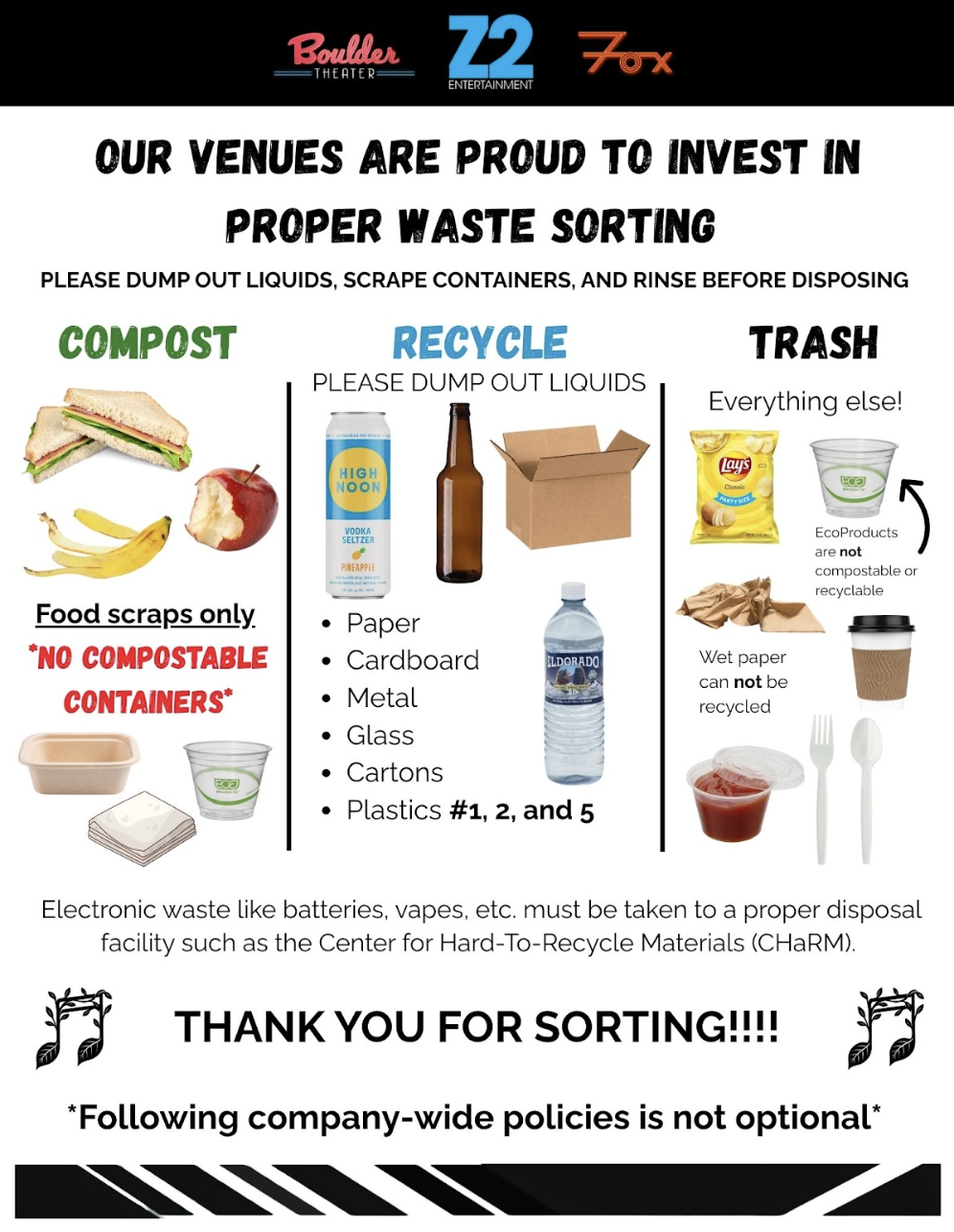
Back of House (BOH) posters and signs are visual tools placed in staff-only areas such as kitchens, dish pits, prep spaces, bar backs, storage rooms, and loading zones to communicate key sustainability expectations. These materials often include waste sorting guides, water and energy reminders, material handling instructions, and department-specific sustainability tips. BOH signage provides staff with quick, easy-to-understand direction at the exact moment they need it.
Live-event environments move fast, and staff often need immediate guidance to make the right sustainability decisions. BOH signage reinforces training, reduces errors, and helps standardize procedures across shifts, departments, and venues. Clear visuals also reduce cognitive load during busy periods, making it easier for employees to sort waste correctly, conserve resources, and follow operational protocols. Effective BOH signage strengthens overall system performance and ensures sustainability remains visible, practical, and actionable for staff.
How
-
Signage is one of the most effective ways to communicate sustainability expectations at the moment of action. Place clear, high-contrast signs in areas where decisions are made, and tailor signage to respective departments, like:
Back-of-bar waste sorting
BOH prep and dish areas
Production spaces
Green rooms
Staff hallways and meeting areas
Signage should be visual, easy to interpret, location-specific, and tailored to each department
-
Prioritize simple icons, minimal text, and high-contrast colors so staff can interpret information quickly, even in low-light or high-activity environments.
Why
Sample Signage: